
SPEAK
The Courage to Speak Up
As American Professor Dr Brené Brown said:
“Vulnerability is the path back to each other, but we are so afraid to get on it”.
This is especially true in our community, those moments where we find ourselves so riddled by our own shadows, past, or moral trauma and not knowing where to turn. It feels too hard to speak up about it and much easier to self-isolate and armour up, not wanting to be a burden on anyone else – until often it’s too late.
Can you relate?
In 2020 Special Forces Veteran Heston Russell had his own suicidal ideation and after that moment called a bunch of mates only to realise they had all been through something similar. It wasn’t until actually speaking out loud about it, that he was able to start breaking down the stigma, introduce daily mental fitness sessions and begin healing – not just for him, but also for many who were listening.
Heston was joined by Scotty Evennett, a fellow Special Forces Veteran on the Voice Of A Veteran Podcast, to openly talk about their struggles and to have what Heston calls his mental fitness session.
Here is the type of follow up messages that episode stirred up in the community:
“Recently I discovered your podcast. Thank you. Know that you are helping to give many struggling young veterans a voice, value and purpose back in the world. On a personal note; Like you and many others, I have struggled with suicide and depression and your content is helping me as I learn to grow from my experiences”
“I’ve been listening to the podcast. It’s been really emotional listening to it because since I got out I’ve been like a lost soul, struggling with losing my identity. To hear Heston speak so candidly and honestly about how he has been feeling, thinking and acting through his transition out of Defence hits so hard. That’s exactly how I’ve been. That podcast has helped me so much. It’s also helped my Wife understand what’s going on inside me“.
“I listened to the first episode today. I’m just the wife of a veteran (7 years in and 4 years out now) but you hit the nail on the head with the loss of purpose.
I would pick my husband up in that first year of discharge: crying saying how he had felt lost and we had nowhere to turn to! Little did he know he had mates that were going through similar things. I’m glad to say though – these days he has found a new purpose, his own little side hustle (along with being a stay at home dad with our little monkeys). He and his mates are open about all the sh*t they go through now and they have such great support amongst themselves.
I just wanted to say thank you.
Thank you for being the voice that so many of the veteran community need!!“
If you want to listen or watch this episode – Click here.
You don’t need a podcast, you just need to start talking. With a mate, a family member, a psychologist, a fellow Veteran. Find the people in your life you can be authentic with – and if no one comes to mind – it’s time to find them.
A Collection of Voices
We spoke to a collection of Veterans within the VSF community recently and asked them their thoughts on speaking up about mental health and why it’s important.
Here is some of what they had to say:
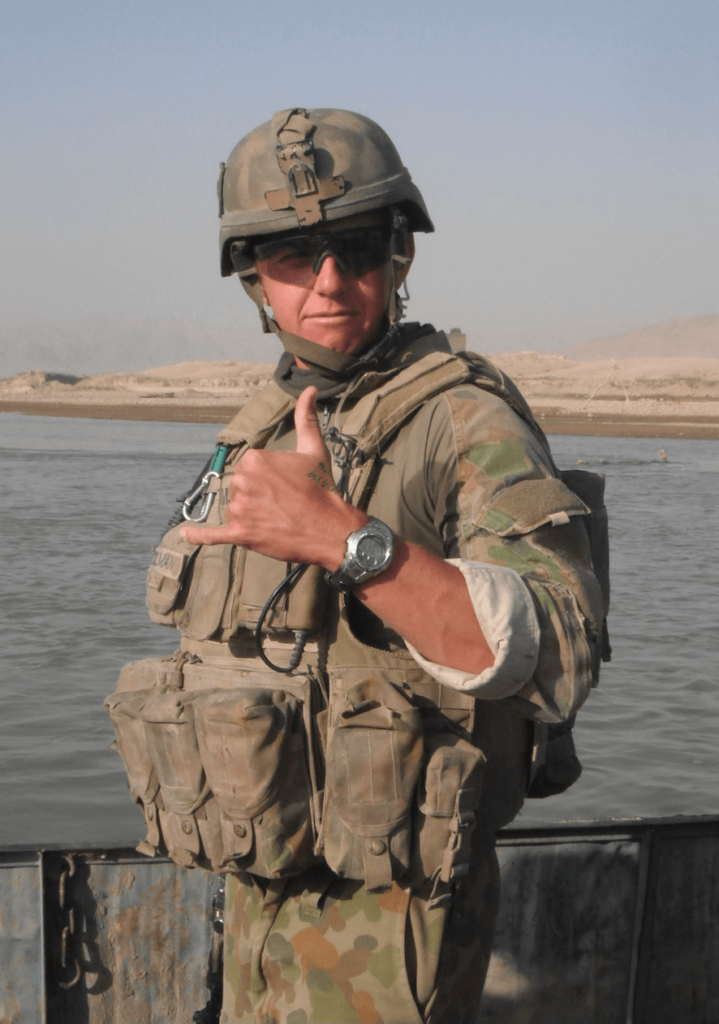
Nathan – Army Veteran
“If I don’t speak up about my mental health, it comes out in other ways, drains me and drags me down. But the minute I released it and told my story – it felt like a massive weight was lifted”
“A sense of community is one of the most important things when it comes to mental fitness because you are so used to doing everything together in service – you eat, sleep, train, deploy together. If you can find that community outside of service you will feel that sense of purpose and identity”
“As ex service, we do things with our mates, we have to choose to not self isolate or socially withdraw and instead get back out there, connect with our mates and keep moving forward”
“Mental fitness – you’ve got to build it and the best approach for me is from the top down:
Head – Heart – Body.
- Start with your head, your mindset – wake up and start your day right (take the dog for a walk, do a workout, do something you enjoy).
- Heart – bring in some mindfulness (on your walk do some gratitude, come back to the present moment).
- Body – get the legs going and the heart pumping in whatever way you can”
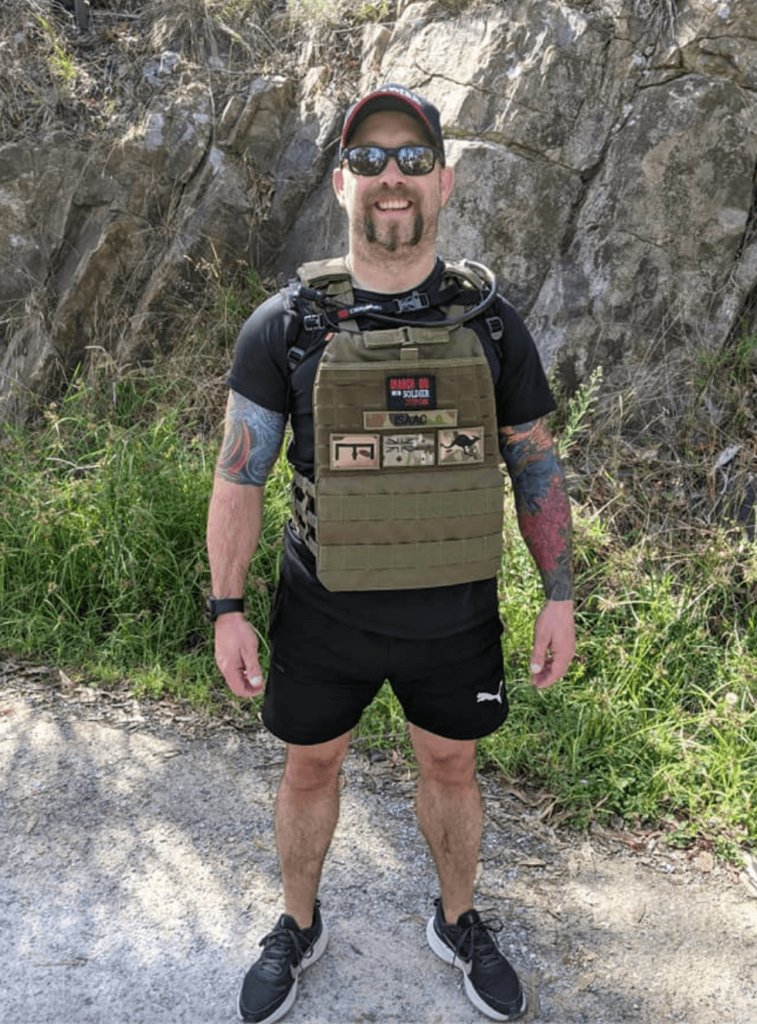
Jason – Army Veteran
“I wanted to serve, I wanted to serve people, I wanted to serve my nation. I was very proud and really looking forward to a career within the Army. Unfortunately that didn’t go to plan and due to being medically discharged – it led to a loss of purpose and it really started to affect me”
“We were pushed to breaking point – and continued to move forward to make sure the job was done. Only to be abandoned by those that broke me”
“My experience to drive mateship within the VSF community – is getting back to the true and authentic brotherhood for those that have signed the line. When you transition from defence you become very isolated.
The military spends a lot of time investing in team work – but when we come out of the military we lose that team”
“For me it’s recognising that it’s not a sign of weakness to say “hey i’m having a tough day and I need help with this” – it’s actually a sign of strength, to know you are not 10 feet tall and bulletproof”.
“A community that is forged together is a community that is stronger together”.
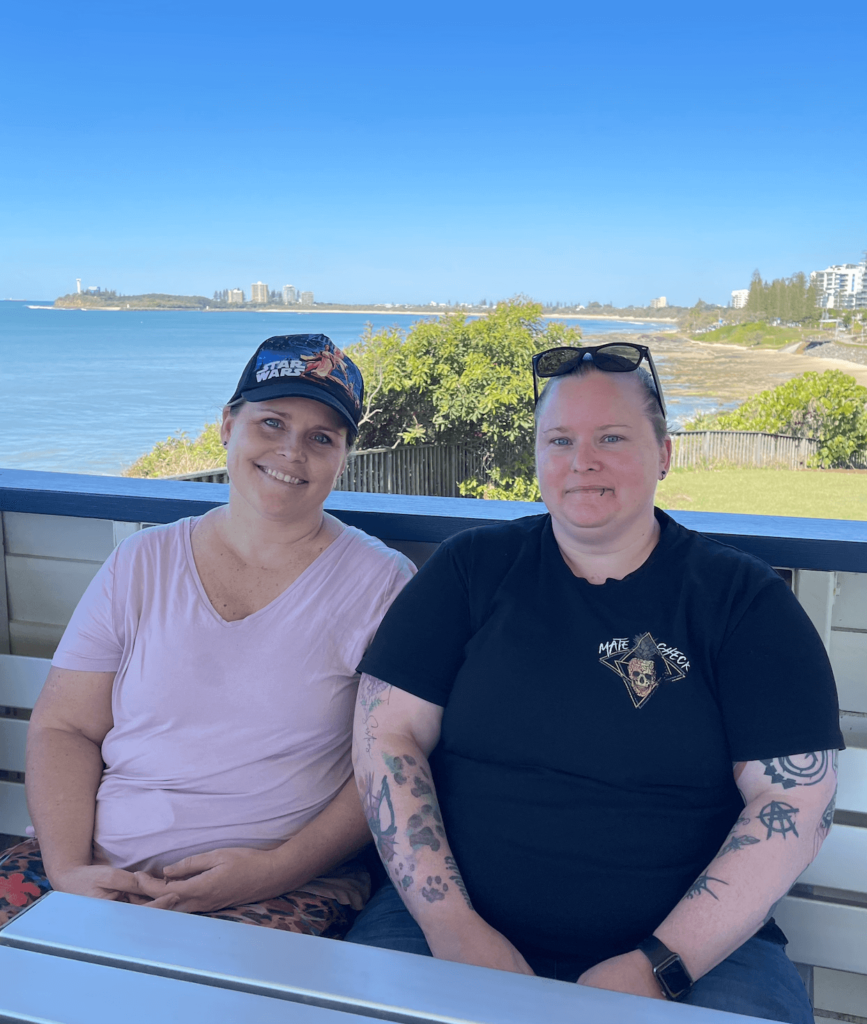
Emma & Amanda
– Sisters & Army Veterans
“Having the support network of friends and catching up with them once a week, seeing my psychologist, checking in with my family – having a release of the struggles on a weekly basis has definitely helped me” – Emma
“Since separating from the military, I’ve definitely felt a loss of identity and community. It’s been very helpful having a sister who was also in the army who can empathise and understand what I’m going through and reconnecting with family” – Amanda
“I think people do try and warn you about what it’s like when you leave defence, but it doesn’t compare to the reality. You can explain something to someone, but you don’t know in reality how you will actually feel” – Amanda
“As bad as it seems now, it definitely gets better” – Amanda
“Connection, connection with a person in your life you find are significant to you, that’s all you need” – Emma
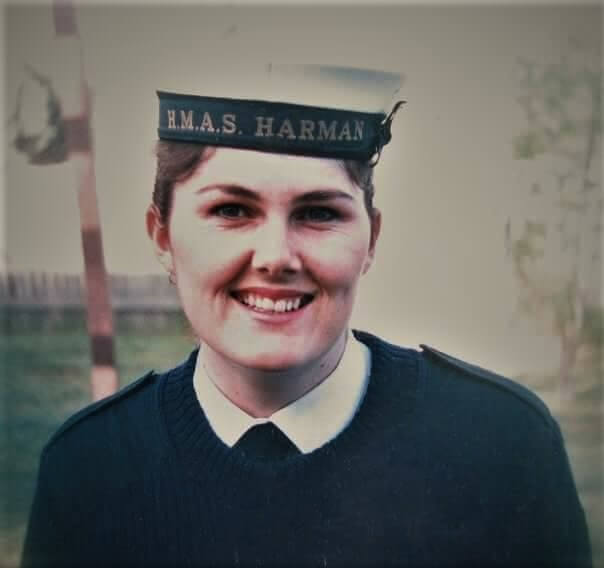
Natalie – Navy Veteran
“When my mobility was dramatically affected, I was forced to slow down and my brain now had time to address the secrets of the past”
“I share my story, to raise awareness because I know I’m not alone. It’s far from easy to be vulnerable and open about your experiences, but I strongly encourage you to reach out for support, talk to trusted family and friends”
Time to Act
For many of us, leaving the Military creates gaps in our lives that were otherwise filled with purpose and values. That is why community, connection and having vulnerable conversations with your support network are so important when you transition from Defence.
Here is 3 ways you can begin speaking up today:
- Reach out to a mate, give them a call and say G’day.
Ask a question you’ve never asked before, maybe a question that you wish someone would ask you. - Join the VSF community and ask to be connected to a buddy to participate in weekly catch up chats.
- Start speaking or writing your story as a testimony to the Royal Commission into Defence and Veteran Suicide – click here to find out why that will help.
We will continue to bring awareness to the importance of speaking up and out about your struggles, so no one feels alone or like they have to suffer in silence. We know what it takes to be a team, we just have to count backwards from 3 and go out and find it.
If you want to show your support to Veterans you can do so by purchasing an Australian Veterans Supporter Pin – CLICK HERE.
One of my very first interviews I had when I applied to join the services was with a RAAF psychologist. Even as a very young 17-year- old, I quickly ascertained that he was not a balanced individual. When I spoke to the other candidates, they all expressed a similar concern about his strange behaviour.
Over the next 20 plus years in uniform, I encountered numerous individuals, who had some sort of mental health issue. In nearly all cases, their condition was not as a result of service life but something they had prior to enlisting.
These people were destructive and the cause of many good people choosing to leave the Defence Force, as well as some monumentally embarrassing scandals that brought the services into disrepute.
When I joined (post-Vietnam War) the bar was set extremely high and one felt privileged to make the grade. In the aircraft trade, I believe that for every ten that applied only three would actually become aircraft technicians.
When I left in 2003, we had a saying that for every ten that applied – 11 got in.
One aspect of recruiting I would like to see managed better, is the psychological screening. Not everyone is suited for service life. Julian Knight is a classic example of where quantity is given priority over quality. I have had to deal with disaffected subordinates and profoundly narcissistic senior officers. I was trained to repair aircraft not behavioural issues.
I understand that in the event of an invasion – anyone with a heart beat automatically qualifies to be in uniform. But that is an extreme circumstance.
I would like to see recruiting take on a more proactive role, I understand that things can go awry but wouldn’t it be better to start with good material rather having to manage someone who is simply damaged stock.
I can relate to your summary of the recruitment process. It’s a factor of the government’s of the day and their approach to governing. The “right” have historically outsourced or sold off public assets, reduced public service expenditure and believe in a hands off approach to market regulation where as the “left” historically introduced more regulation especially to business and industry, putting more onus into workers rights and enterprise bargaining and large expenditure intro public services. It’s a delicate art to get the balance right between worker, small business, large business/corporations, taxation, delegation of government to states, the environment the list goes on!! Unfortunately we have paid heavy toll for the deregulation/outsourcing of recruitment and legacy issues from DVA including reduced funding, staff and lack of repealing outdated legislation and streamlining it to meet current requirements. Effectively Defence recruitment was treated as a commodity and outsourced to the lowest bidder who was paid for every person recruited not paid to put the right person in the right job and keep those not suited out.
Thank you to validate me.